

SOIC lead protection takes more than a static-shielding bag. I have seen this too often: a gull-wing device packed loose, with nothing to protect its delicate leads during handling.
One 300-mil SOIC that prompted this article had several leads bent inward, tucking beneath the body instead of retaining their intended gull-wing shape. That is the problem with treating a shielding bag as the entire packaging solution: static protection and lead protection are two different jobs.
The bag has a job. So does the carrier.
A properly specified and closed static-shielding bag helps protect its contents from external electrostatic discharge. Ordinary flexible bag film, however, does not provide the rigid support or controlled clearance needed around exposed gull-wing leads.
Pressure through the bag, snagging during loading or removal, and contact between loose devices can deform those leads. The bag does not have to tear for the component to suffer mechanical damage.
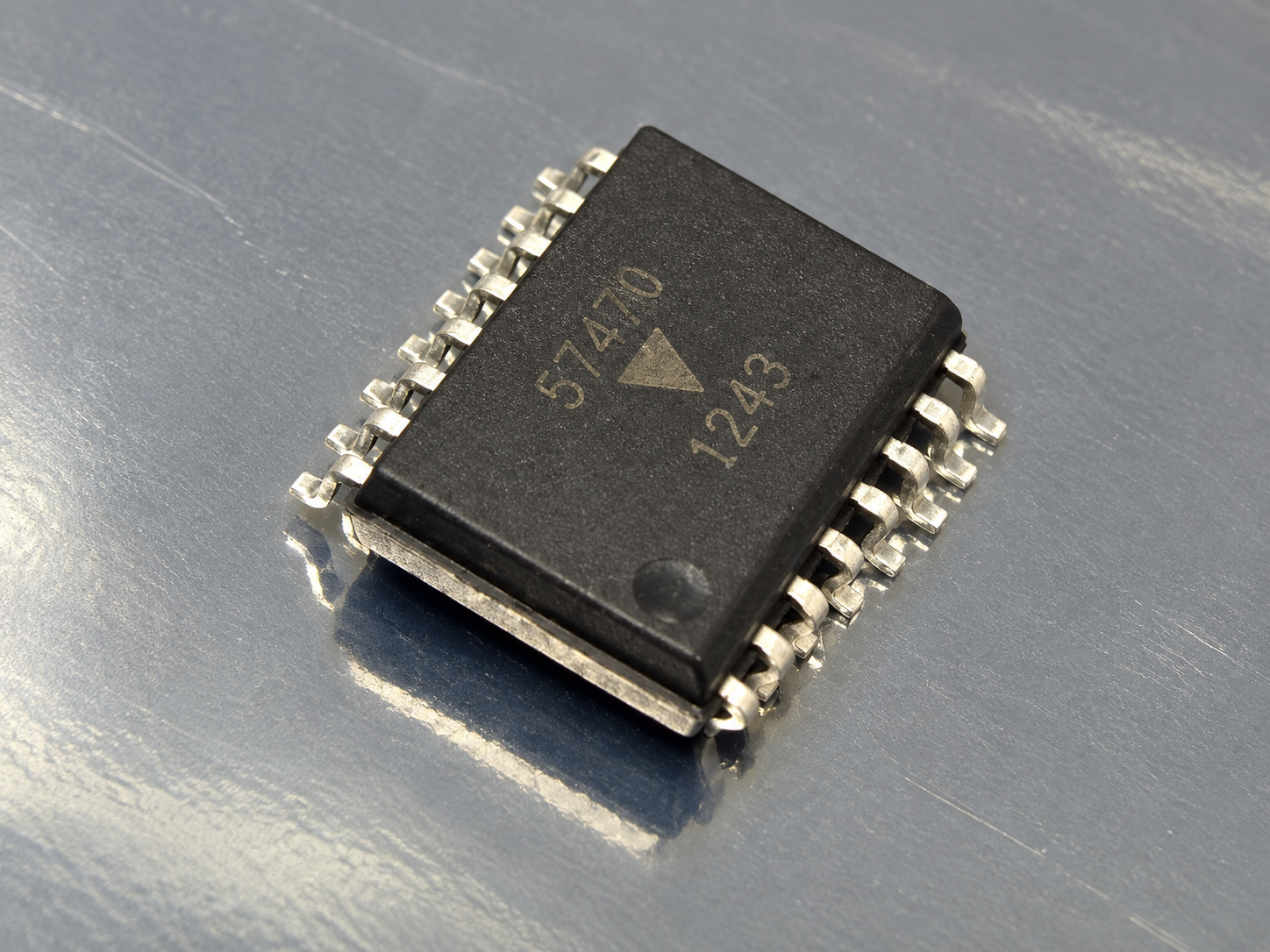
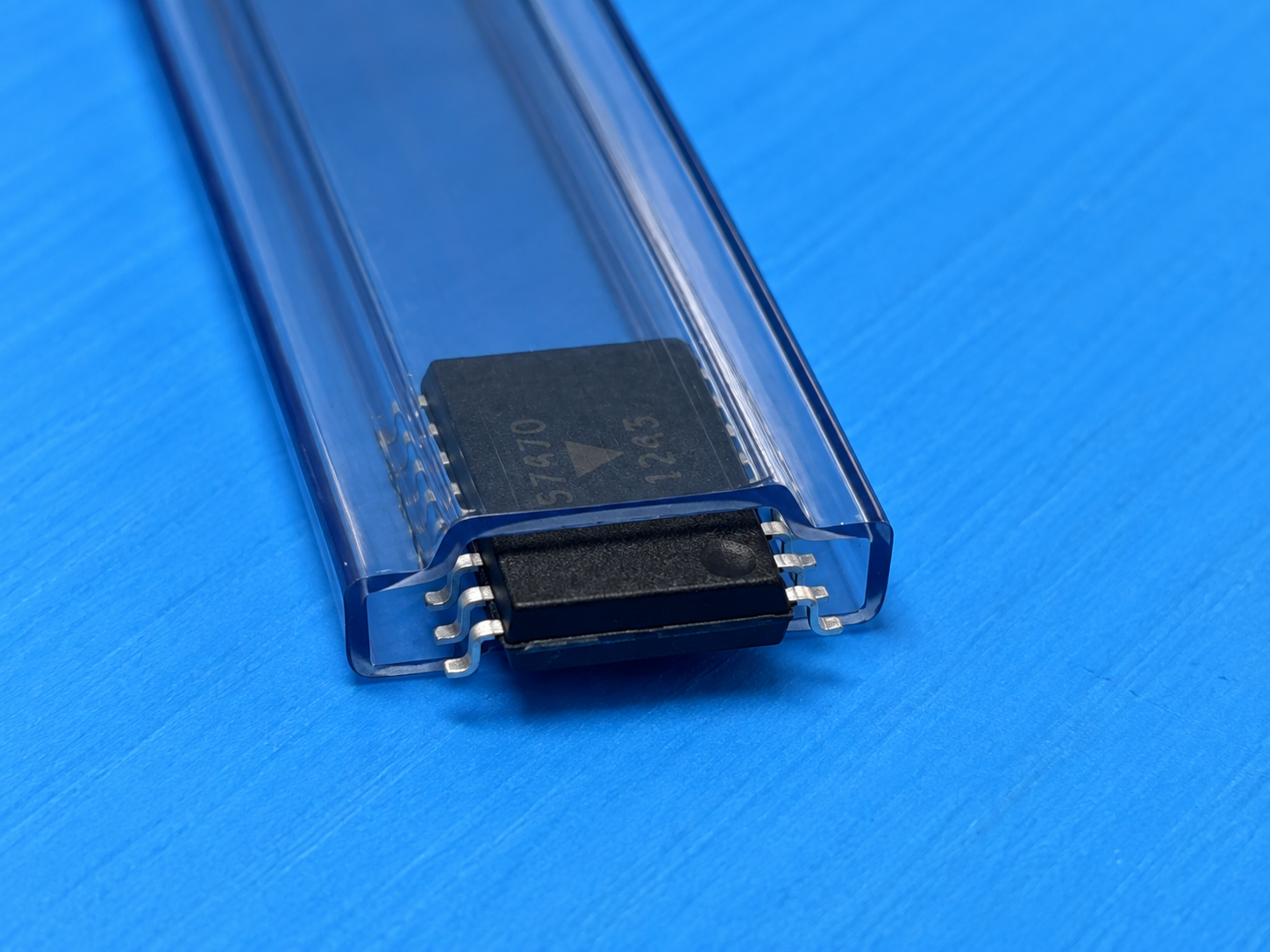
The images in this article are AI-assisted illustrations based on original Malaster photographs. They explain the packaging concept, not exact lead condition or dimensions.
Give those leads some personal space
Effective SOIC lead protection starts with a matched SOIC shipping tube that supports the package body, maintains orientation, and provides clearance around the leads. Its protective geometry matters as much as its material.
Choosing a tube by the words SOIC or 300 mil alone is not enough. Check body width, overall height, lead span, and the actual lead shape against the tube profile. Loading and unloading should not require forcing the device past the walls or rails.
This principle also applies to other exposed-lead packages, including QFPs: choose a carrier designed for that specific device geometry. The SOIC tube pictured here is not a universal solution. Malaster’s IC shipping tube guide explains the broader selection considerations.
Finish the package, not just the bag
- Match the profile. Review the device drawing for body support, lead clearance, and orientation. Check smooth loading and unloading with a sample where possible.
- Secure both tube ends. Use compatible closures and manage unused length with an appropriate filler or stop arrangement so devices cannot travel excessively along the tube. Do not force packing material against the leads.
- Provide the required ESD enclosure. Antistatic does not automatically mean static shielding. Select and close the shielding package required for the device and its handling environment.
- Protect the outer shipment. Cushion and secure the loaded tube or bundle inside a suitable carton. Address moisture-sensitive dry-pack requirements separately when applicable.
The EOS/ESD Association’s packaging guidance identifies discharge shielding as an additional requirement outside an ESD protected area. For bag selection and closure considerations, see How to Choose the Right ESD Bag.
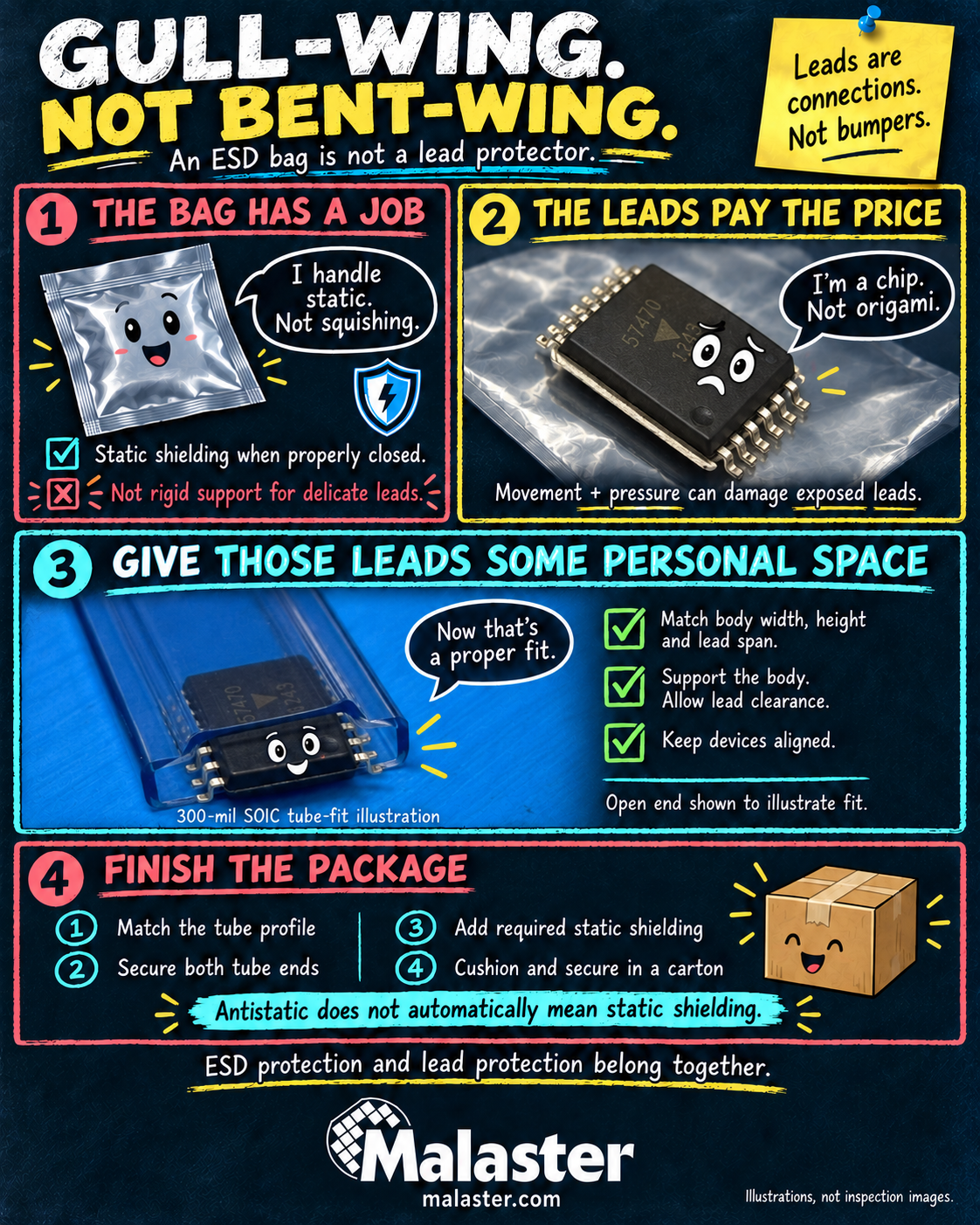
Gull-wing, not bent-wing: the visual guide
A little packaging humor, with a practical point: electrical protection and mechanical protection need to work together. Select the infographic to view the larger image.
Need help finding the right fit?
Send Malaster the device drawing, dimensions, quantity per tube, and handling requirements. A photo of your current packaging also helps. Malaster can review available profiles or evaluate a custom packaging approach.
Request packaging assistance