
Semiconductor Wafer Packaging
Protect wafers during storage, handling, and shipping with complete WafPak systems, wafer jars, protective liners, foam cushion discs, and Tyvek wafer separators. Choose a complete packaging assembly or the individual components your application requires.
Need a different fit? Malaster can customize foam, separators, and packaging configurations around your wafer dimensions, stack height, surface sensitivity, and handling requirements.
Choose Your Wafer Packaging
A wafer package works as a system: the container, liners, cushions, and separators each serve a different purpose. Start with a complete WafPak assembly when you need matched components, or select individual parts for an existing configuration. Confirm the fit using actual wafer dimensions, stack height, and the selected product specifications.
Configure the Package Around Your Wafer
Malaster can adapt wafer jars with custom foam profiles, cushion arrangements, and separator shapes and materials, including BLAC black polyethylene interleaves. Configurations can accommodate suitable square wafers, specialty substrates, mounted frames, and dicing blades, with support and clearance reviewed for each application.
Send a drawing or dimensions, the quantity per package, and any surfaces that must avoid contact. Malaster can help review the fit, materials, and loading and removal requirements.
Request a Wafer Packaging ReviewSee How the Components Work Together
Review the assembly layers, foam and separator options, stack-height checks, and examples of custom wafer packaging.
Read the Wafer Packaging Guide →All Wafer Packaging Products
Filter by wafer size, product type, and material to narrow the catalog. Open a product page for specifications and ordering details.
| Part Number | Product | Size | Product Type | Material | PRODUCT PAGE | hf:tax:pa_wafer-size | hf:tax:pa_wafer-product-type | hf:tax:pa_material |
|---|
How a Wafer Packaging System Fits Together
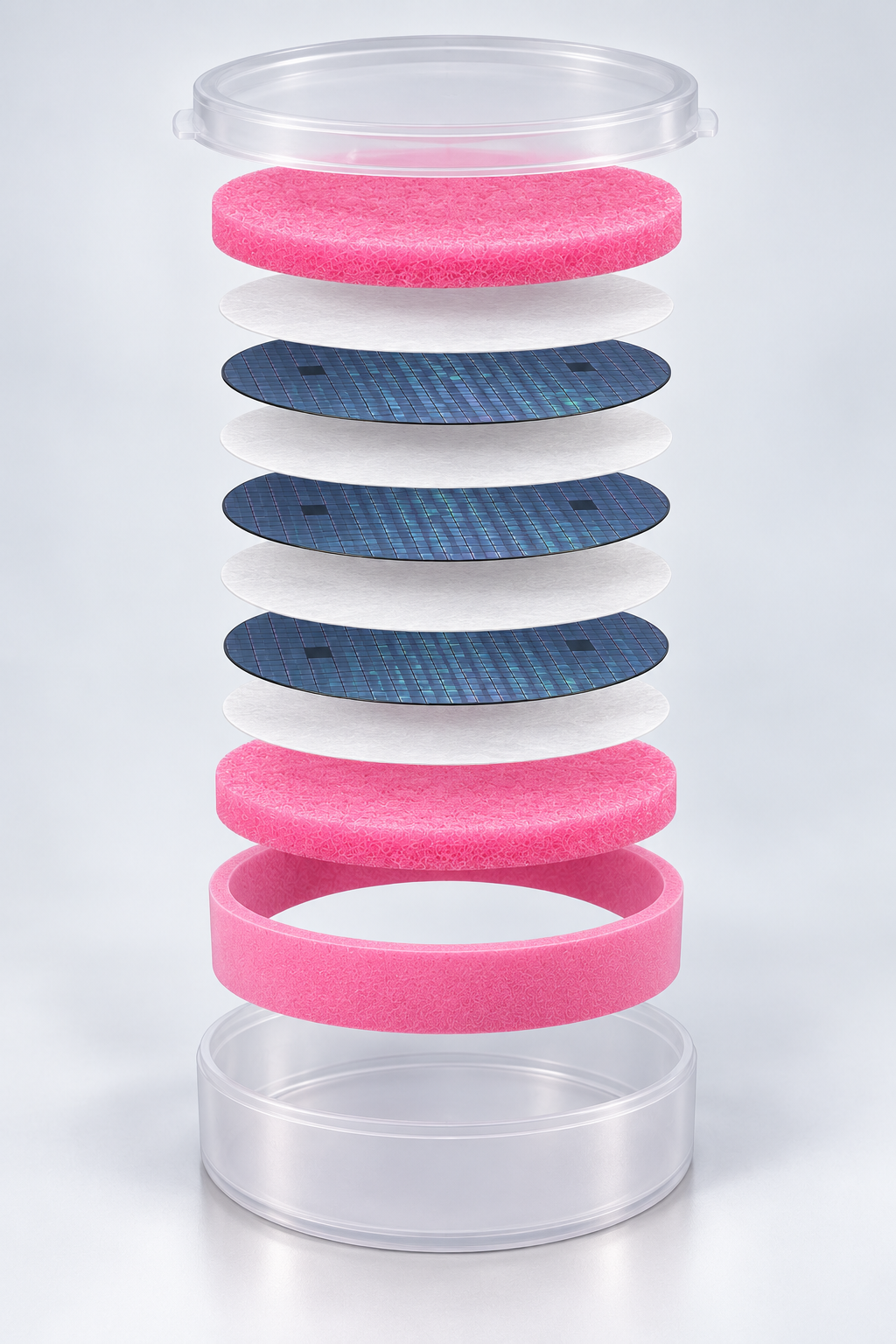
In a horizontal wafer jar, protection depends on how the enclosure and internal components fit the wafer and work together. The illustration shows one conventional arrangement; the final configuration follows your application requirements.
What Each Component Does
| Jar and lid | Provide the enclosure. Usable internal dimensions and closure determine the space available for the part and its packaging. |
|---|---|
| Foam liner | Cushions the inside wall around the stack. Custom inserts can support a different outline or provide handling clearance. |
| Foam cushions | Support and cushion the load. Material, thickness, and compression affect the final fit. |
| Wafer separators | Provide the selected contact layer between wafers and, in a conventional Tyvek arrangement, between wafer faces and foam cushions. |
If wafer-face contact is prohibited, request a support review before selecting a stacked arrangement.
Read the Wafer Packaging Configuration Guide →Wafer Packaging Selection Questions
Use these answers when choosing a product or reviewing an existing configuration.
What is included with a jar, a lined jar, or a WafPak system?
Jar-and-lid sets supply the enclosure. Lined jars add the specified sidewall liner. WafPak Product Systems include the listed jar, liner, cushions, and separators. Review the component list and quantities on the selected product page before ordering.
How do I choose the right jar size and wafer capacity?
Start with the actual wafer outline and thickness. Include separators and cushions at the intended compression when comparing the stack with usable closed-lid depth. Check minimum and maximum wafer counts. Wafer-size labels are nominal; the lid should close without forcing the stack.
Which foam and separator materials should I use?
AFD open-cell foam provides softer cushioning; AFDF closed-cell foam provides firmer support. Select foam and separator materials for permitted surface contact, compression, cleanliness, and electrical requirements. A change in material or thickness can change the package fit.
Does the wafer jar itself provide ESD protection?
The standard polypropylene jar body and lid have no assigned ESD rating. Selected foam, separators, and surrounding packaging must provide the required electrical functions. An antistatic foam specification does not establish an ESD rating for the whole assembly. Request the applicable material information for your selected configuration.
What else should I check before shipping?
Review the configured jar together with any required shielding bag, outer cushioning, and shipping carton for the expected transport conditions. Keep the approved part numbers, quantities, and packing sequence together so repeat orders follow the same configuration.
Need Help Selecting or Improving a Package?
Share what you are packaging and what the package needs to accomplish. For an existing design, include the current part number or photographs and explain what you want to improve.
- Part details: actual dimensions, thickness, drawing, and any frame or projecting features.
- Use and handling: storage, production transfers, shipment, or customer presentation; how parts are loaded and removed.
- Protection requirements: permitted contact areas, sensitive surfaces, cleanliness, and electrical specifications.
- Quantities and timing: parts per package, package order quantity, required date, and cost or packaging constraints.
Send the information you have. Malaster can help identify the remaining details and review standard components or a custom configuration.
Request a Wafer Packaging Review